Key Takeaways:
Warren and Van Hollen challenged SEC guidance they say could narrow crypto investor protections. The letter warns oversight may weaken across token categories, staking, mining, wrapping, and airdrops. Atkins faces a May 8, 2026, deadline as Congress weighs crypto market structure legislation.
SEC Crypto Guidance Raises Investor Protection Concerns
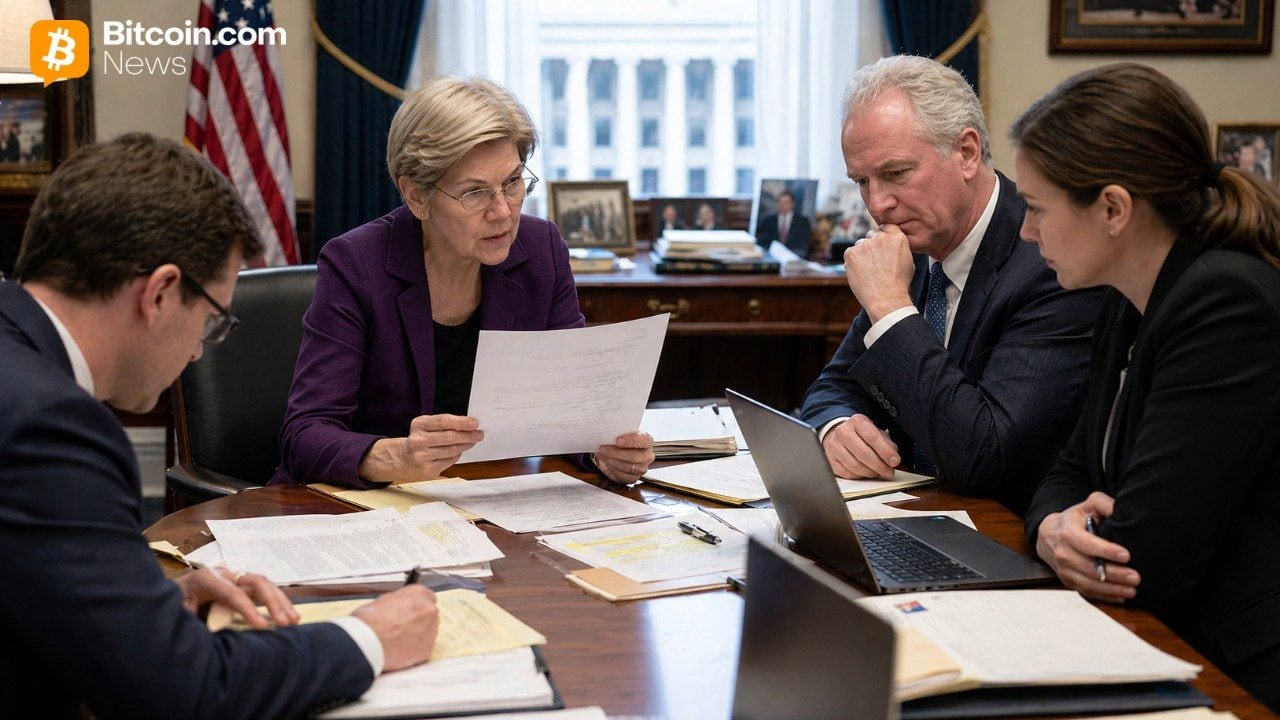
Senate Democrats warned on April 27 that new U.S. Securities and Exchange Commission (SEC) crypto guidance may weaken investor protections by carving out major parts of the market. Senators Elizabeth Warren and Chris Van Hollen pressed SEC Chair Paul Atkins over exemptions they claim could let crypto firms avoid long-standing securities rules.
The senators pointed to an SEC interpretive release that divides crypto assets into five categories: digital commodities, digital collectibles, digital tools, stablecoins, and digital securities. Under that framework, the agency treats digital commodities, digital collectibles, and digital tools as not securities, while stablecoins may or may not qualify depending on their features. The senators asserted that Atkins aims to expand tailored pathways for crypto firms to raise capital with fewer regulatory constraints. They wrote:

“It appears that you plan to work towards this goal by exempting most cryptocurrencies from the securities laws—with significant potential harm to and implications for investors and our financial markets.”
Crypto Exemptions Could Reshape Oversight and Fundraising
The letter gives clearer details on what those exemptions could cover. Warren and Van Hollen wrote that the SEC declares mining, staking, wrapping, and airdrops to be largely outside the scope of securities laws. They warned that this approach could reduce oversight not only of crypto assets, but also of common market activities used to distribute, support, or move them.
The senators also challenged the SEC’s view that a crypto asset can be separated from an investment contract. In their view, the framework could allow assets to enter and exit securities regulation over time. Their concern is that retail investors may lose securities law protections in secondary transactions, even when an asset was previously tied to a securities offering. Warren and Van Hollen also flagged possible future exemptions. Their letter notes that Atkins has discussed a startup exemption, a fundraising exemption, and an investment contract safe harbor for some crypto assets. According to the letter, those measures could allow some crypto companies to raise tens of millions of dollars over several years without registering with the SEC.
A response from Atkins is due by May 8, 2026. The senators urged Congress to close crypto loopholes as it considers market structure legislation. They also pointed to potential benefits for politically connected crypto interests, including those tied to the Trump family. Their letter states:
“Just as certainly as investors will be harmed as the Commission works to provide special treatment for crypto, the Trump family’s holdings will be boosted by these favorable regulatory developments.”
The takeaway is direct: Warren and Van Hollen argue that broad SEC crypto exemptions could weaken investor protections and reduce accountability.