
South Africa’s tax authority has proposed new guidance that clarifies how crypto assets are taxed under existing income and capital gains tax frameworks.
The South African Revenue Service (SARS) on Wednesday published draft guidelines on crypto asset taxation, applying South Africa’s existing tax framework, primarily the Income Tax Act, 1962, alongside capital gains tax rules.
The draft provides that most crypto activities, including trading, swapping and spending, are generally treated as disposals that may trigger tax events. It still emphasizes that the rules depend heavily on each taxpayer’s specific circumstances.
If adopted, the proposed guidelines are set to impact millions of local users, as SARS reported in 2024 that at least 5.8 million residents held crypto assets.

Crypto treated as an asset, not currency
The guidance document reiterated that crypto assets are not legal tender or foreign currency, but rather intangible assets for tax purposes.
“The preferred interpretation of the legal nature of crypto assets is that, although highly versatile and capable of negotiability, they are not ‘currency’ and, consequently not ‘foreign currency’,” the agency said.
Source: SARS
Taxpayer’s intention as a key element
The guidelines place significant emphasis on a taxpayer’s intention when determining how crypto is taxed.
According to SARS, whether a person is classified as a trader or a long-term investor depends on their behavior, transaction frequency and the purpose for holding the asset.
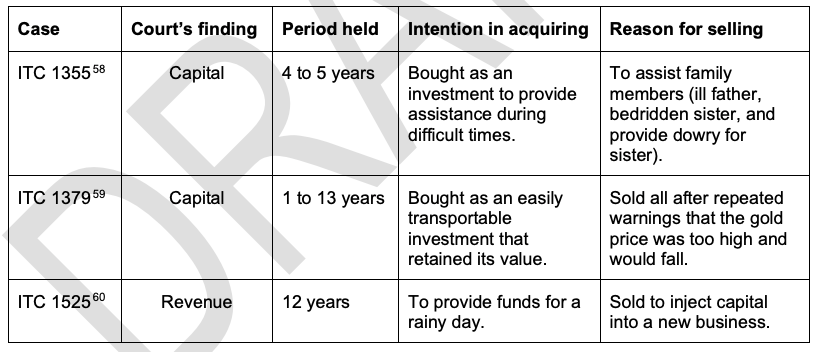
An excerpt on how taxpayer intention is assessed, according to the proposed guidelines. Source: SARS
“It is important to consider the taxpayer’s intention at the time of acquisition, at the time of selling the asset, and whilst holding the asset, as a taxpayer’s intention regarding an asset may change over time,” the authority said. SARS added that this requires a broad assessment of all relevant facts and circumstances.
Related: Crypto lobby urges Congress to pass staking and mining tax bill as is
The guidelines also say crypto assets may fall under South Africa’s donations tax, as the assets are treated as “property” under tax law, with tax rates ranging from 20% to 25%, depending on the value of the donation.
Public input open until August 31
The draft guidance is not final law and is open for public comment until August 31. SARS said it is intended to attempt to provide interpretive clarity rather than introduce new legal obligations.
South Africa has emerged as one of Africa’s largest crypto markets. According to Chainalysis’ October 2024 report, the country received about $26 billion in crypto value during the one-year period covered by the study.
Chainalysis also found that institutional and professional-sized transactions were the largest contributors to total value received, particularly from late 2023 through the first quarter of 2024, highlighting a shift toward larger and more structured market activity.
Magazine: AI is banking the unbanked in Africa… faster than crypto