Key Takeaways
Treasury doubles long-bond buybacks to at least $4B as 30-year yields stalk 2007 highs.Arthur Hayes sees a six-figure bitcoin price as BTC rockets 23.8% amid mounting YCC fears.Treasury buybacks hit Sept. 9, testing whether Washington can beat long-term yields lower.
Treasury Goes After the Long End
Treasury Secretary Scott Bessent’s latest maneuver is not formal yield curve control (YCC), the heavy artillery once deployed by the United States and later Japan. Instead, Treasury plans to at least double liquidity-support buybacks of older 10- to 30-year bonds, lifting the cap from $2 billion to at least $4 billion per operation from Sept. 9 through Nov. 4. Bessent has already left the door open to going bigger.
The move came after long-dated Treasurys took a beating. The 30-year yield punched roughly 5.34% last week, its highest level since 2007, while the 10-year hovered near 4.70% Monday. Higher yields mean falling bond prices, but the damage does not stop with traders. Those rates bleed directly into mortgages, corporate financing, real estate valuations, equites and Washington’s swelling interest bill.
Real Yield Control Brings Out the Bazooka
Actual YCC goes considerably further. Under a formal regime, a central bank draws a line around a particular government bond yield and promises to buy whatever amount is required to defend it. Quantitative easing fixes how many bonds get purchased and lets markets determine the resulting yield. YCC flips that equation, fixing the yield while leaving the potential purchase tab open-ended.

The plumbing is simple once the bond jargon gets stripped away. When investors unload long-term bonds, prices drop and yields climb. A central bank defending a ceiling steps in as buyer, lifting prices and hammering yields back down. If traders believe that promise, surprisingly little buying may be required because shorting bonds against a government institution capable of creating unlimited domestic currency can become a brutal trade.
America Has Already Run This Playbook
The United States has gone down this road before. During World War II, the Federal Reserve agreed in 1942 to hold Treasury bill rates at 3/8 of 1% while effectively pinning long-term government bond yields at 2.5%. Washington gained predictable wartime financing, but the price was steep: The Fed surrendered considerable control of its balance sheet because every serious market challenge required another round of bond buying.
Inflation eventually cracked the arrangement. Treasury wanted financing kept cheap while the Fed increasingly needed higher rates to contain mounting price pressures. The collision produced the Treasury-Federal Reserve Accord of March 1951 and restored greater monetary-policy independence. The lesson was hard to miss: A central bank can bully government yields lower, but eventually that fight can collide head-on with inflation.
Japan Pushes the Machine Until It Breaks
Japan ran the modern version. The Bank of Japan introduced YCC in September 2016, setting a short-term rate of minus 0.1% while targeting roughly 0% on 10-year Japanese government bonds. The setup lasted because Japan had weak inflation, deep domestic savings and relentless demand for government debt. Over time, though, the central bank swallowed an enormous share of the bond market as liquidity and genuine price discovery deteriorated.
When global inflation returned, traders started testing Japan’s resolve, forcing policymakers to repeatedly loosen the permitted yield range. The Bank of Japan finally ditched explicit YCC in March 2024 and gave markets more freedom to price long-term rates. Japan proved that a yield ceiling can survive for years, but escaping becomes increasingly painful after banks, governments and investors build entire positions around suppressed borrowing costs.
Bessent’s $4 Billion Gambit Is Not YCC
That difference is critical in Washington now. Treasury is purchasing older, less-liquid long-term securities and retiring them, injecting demand where the market has been particularly fragile. Purchases could be financed through additional short-term bills or cash from the Treasury General Account, essentially Washington’s checking account at the Fed. Neither method creates an unlimited buyer or draws a hard ceiling across Treasury yields.
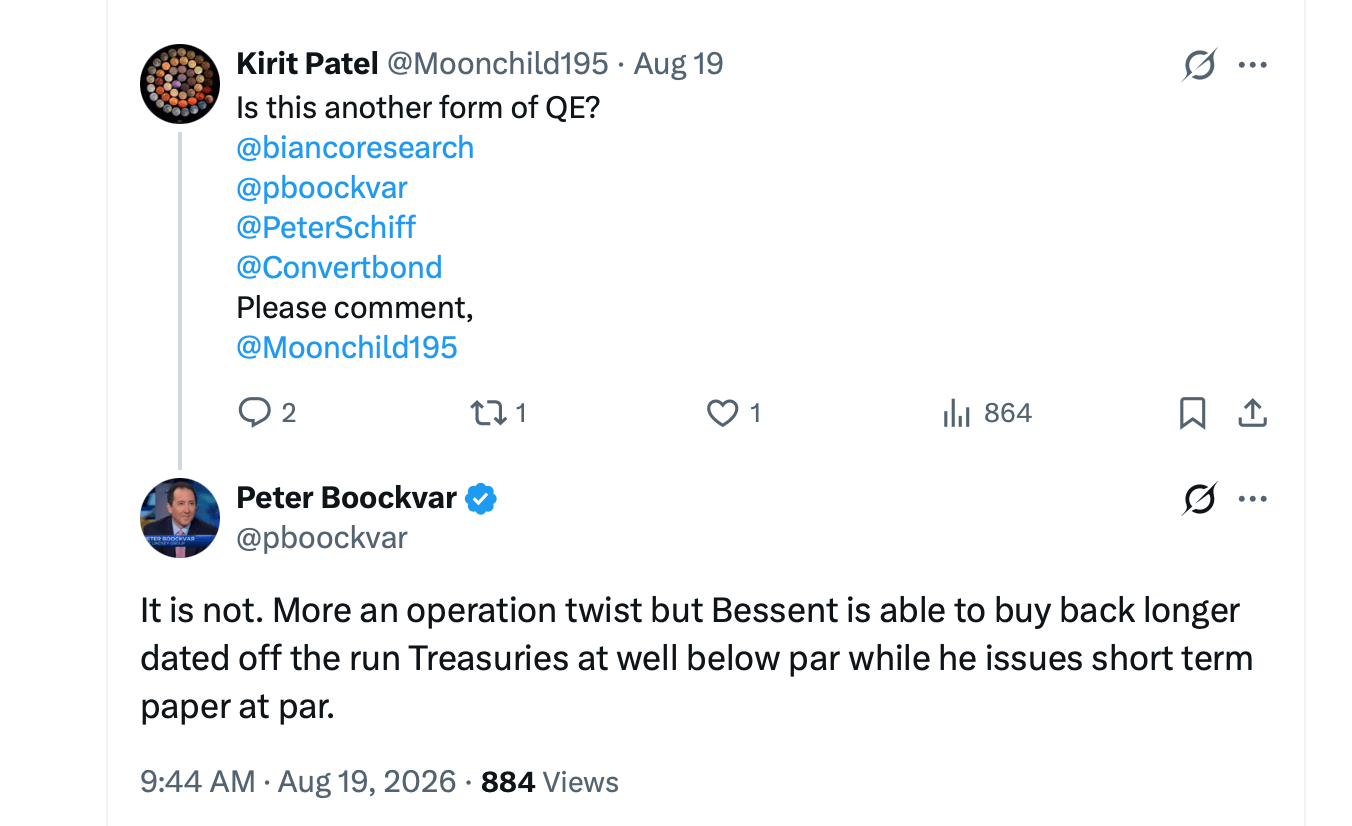
Markets have already exposed that limitation. The 30-year yield initially dropped roughly 9 to 10 basis points after the announcement before quickly clawing much of it back. By Monday, the 10-year sat around 4.70% and the 30-year long bond at 5.23%, still hovering around the danger zone that triggered Washington’s response. The expanded purchases have not even begun, so traders have been pricing Treasury’s warning shot rather than actual firepower.
$40 Trillion Debt Turns Up the Heat
Behind the bond fight sits the monster nobody can trade around forever: federal debt reaching $40 trillion alongside annual deficits around $2 trillion. As cheap legacy debt matures and gets refinanced at today’s higher rates, Washington’s interest tab ratchets upward. Bigger interest bills widen deficits, force more borrowing and dump additional supply onto a Treasury market already demanding better compensation to absorb it.
That feedback loop is exactly why yield suppression starts looking attractive once governments become heavily indebted. A hard ceiling could temporarily break the cycle, but it opens the door to fiscal dominance, where monetary policy increasingly serves Washington’s financing requirements instead of inflation control. Buybacks can shuffle maturities and change who holds Treasury securities. They cannot make the underlying $40 trillion obligation disappear.
Hayes Sees Bitcoin Price Climbing Fast, Druckenmiller Says ‘Let the Bond Market Speak’
Market observers and traders watching bitcoin’s price are paying attention because serious yield suppression would change the arithmetic surrounding scarce assets. Bitmex co-founder and Maelstrom boss Arthur Hayes argues that anyone worried about eventual YCC should own bitcoin, predicting the leading cryptocurrency could reach the “hundreds of thousands very quickly.”
Bitcoin’s price has jumped 23.8% over the week, pouring gasoline on speculation that traders are already positioning for easier financial conditions. Still, there is no mechanical bitcoin moonshot button here. Yield control alone cannot guarantee higher prices. Dollar liquidity, leverage, inflation expectations, and appetite for risk can easily overwhelm the trade.
But suppress nominal yields while inflation stays sticky and inflation-adjusted bond returns get squeezed. That is precisely the setup where gold, bitcoin and other scarce assets can attract investors unwilling to watch government money quietly eat their purchasing power.
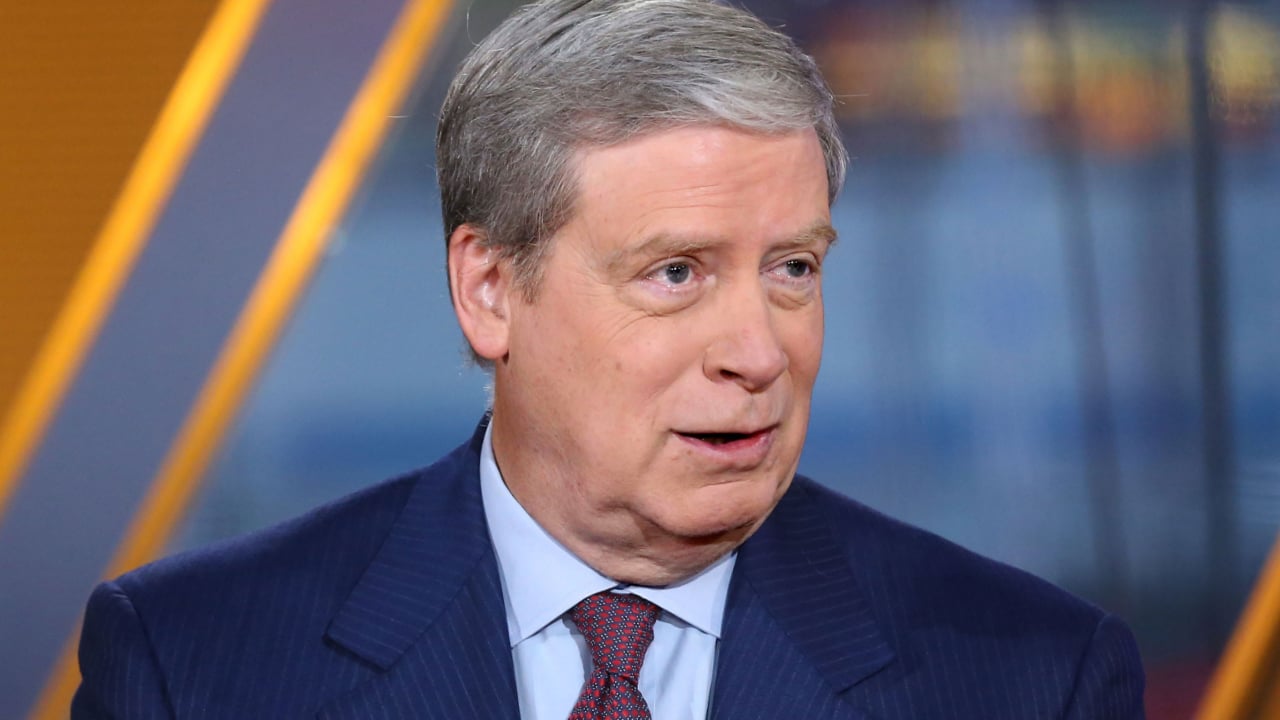
Billionaire Stanley Druckenmiller argues Treasury crossed a dangerous line Aug. 19 when it doubled long-dated bond buybacks after the 30-year yield hit a 19-year high, calling it price management dressed up as liquidity support. Yields dropped, then snapped right back. There were “no failed auctions, no dealer balance-sheet seizure,” only an orderly market pricing 3–4% inflation, 6% peacetime deficits at full employment, and $40 trillion in debt,” Druckenmiller wrote in a Wall Street Journal (WSJ) opinion editorial.
“The long-term Treasury yield is the most important price in the world. It is also the only fiscal disciplinarian the U.S. has left.” Crushing that signal becomes “a subsidy to procrastination” that lets Washington duck entitlement reform. He warns that repeated operations could mutate into permanent yield defense and stealth QE.
Instead, restore routine buybacks, term out debt at market rates, and tackle entitlements. “Governments defending prices against fundamentals always lose.” His bottom line:
“Let the bond market speak.”
Druckenmiller also got some heat for his blog post, as people assumed generative artificial intelligence (AI) was leveraged to compose his WSJ article discussing bonds. Critics called it “AI slop,” while others questioned whether it mattered if he used AI to compose it. Reports noted that Druckenmiller admitted to using AI.
Bond Traders Now Test Washington’s Nerve
For the moment, Treasury is intervening in the bond market, not running genuine YCC. There is no official yield ceiling, unlimited purchasing pledge or Federal Reserve balance-sheet expansion. What matters now is whether Washington merely wants to nudge long-term borrowing costs lower or eventually decides the market cannot be permitted to push yields beyond a politically painful threshold.
The first serious test lands Sept. 9 when the enlarged buybacks actually begin. Traders will watch whether long yields buckle, whether Treasury reaches for larger purchases and whether the Fed remains willing to let markets dictate long-term financing costs. If yields keep grinding higher anyway, Washington faces the question every yield-control experiment eventually encounters: Accept the bond market’s price, or start taking that price away from the market.