What is a privacy coin? This question has become increasingly relevant as cryptocurrency users look for stronger control over financial visibility, anonymity, and on-chain exposure in a world of growing surveillance. From shielding balances to enabling a truly private transaction, privacy-focused cryptocurrencies are shaping how people think about financial autonomy in 2026.
In this article, we discuss how privacy coins work at a high level, why demand for them continues to grow, how they differ from transparent blockchains, where they fit within current regulations, and what risks and trade-offs users should understand before engaging with them. Keep reading to explore how privacy coins are influencing the future of digital money.
What is a Privacy Coin?

A privacy coin is a category of cryptocurrency built to limit the visibility of transaction data while still operating on a public blockchain. It prioritizes user control over what information is exposed, focusing on transaction flows rather than speculative features or branding narratives. Unlike transparent networks where wallet balances and transfers can be traced indefinitely, privacy coins are designed to reduce linkability between sender, receiver, and amounts. This design choice explains how privacy coins fit into cryptocurrency as a functional response to traceability, compliance pressure, and the increasing use of blockchain analytics across exchanges, governments, and enterprises.

How Privacy Coins Protect Your Identity
Privacy coins protect user identity by minimizing the amount of data that can be observed, linked, or analyzed across transactions. Instead of relying on account based transparency, they obscure transactional relationships so outside observers cannot reliably connect wallet addresses, balances, or activity patterns to a real person. This approach reduces exposure to profiling, tracking, and behavioral analysis on public ledgers.
These systems rely on privacy technologies beyond smart contracts to achieve confidentiality at the protocol level. Techniques such as ring signatures, stealth addressing, and zero knowledge proofs are used to mask sender and recipient details while still allowing the network to validate transactions. In some cases, ring confidential transactions hide transferred amounts, ensuring that even transaction values cannot be reconstructed or inferred through chain analysis.
Key Technologies Behind Privacy Coins
Crypto privacy coins rely on technologies to ensure every private transaction remains secure and untraceable. These innovations go beyond traditional cryptocurrency mechanisms, offering users unparalleled anonymity and protection. Here are the key technologies behind privacy coins:
Stealth Addresses: Generate unique, one-time addresses for every transaction, ensuring that no two transactions can be linked back to the same user.Ring Signatures: Hide the sender’s identity by mixing the transaction details with others, making it extremely difficult to trace.Confidential Transactions: Hide the transaction amount, ensuring sensitive financial details remain private.Zero-Knowledge Proofs: Allow verification of transactions without revealing any details about the sender, receiver, or amount.
How Privacy Coins Ensure Transaction Anonymity
Privacy-focused altcoins implement advanced mechanisms to guarantee that every transaction remains anonymous and untraceable. Unlike traditional cryptocurrencies, which openly display transaction details on a public ledger, privacy coins are built to shield sensitive information such as the sender’s identity, recipient details, and transaction amounts.
Stealth addresses are one of the core technologies used. These addresses create a unique, one-time code for every transaction. This ensures that even if someone examines the blockchain, they cannot link multiple transactions to the same user. This feature is particularly valuable for individuals who prioritize confidentiality in their financial dealings.
Ring Signatures are another essential tool. They work by blending the sender’s transaction with several others, creating a group of possible senders. This makes it nearly impossible to pinpoint the actual origin of the transaction, offering an additional layer of anonymity.
Zero-Knowledge Proofs further enhance privacy by allowing the verification of transactions without exposing any details about the parties involved or the amount being transferred. This ensures that users can maintain complete confidentiality while still adhering to the blockchain’s security protocols. These technologies collectively empower privacy-focused altcoins to provide a secure and anonymous environment for digital transactions, meeting the needs of users who demand discretion and data protection.
Popular Privacy Coins You Should Know
Privacy coins differ in how they approach anonymity, auditability, and network design. Some enforce privacy by default, while others allow users to choose when to shield transaction data. Understanding these differences helps explain why certain projects continue to attract users who want to buy privacy coins without KYC and reduce long term exposure to financial surveillance. Here are popular options:
1. Monero (XMR)
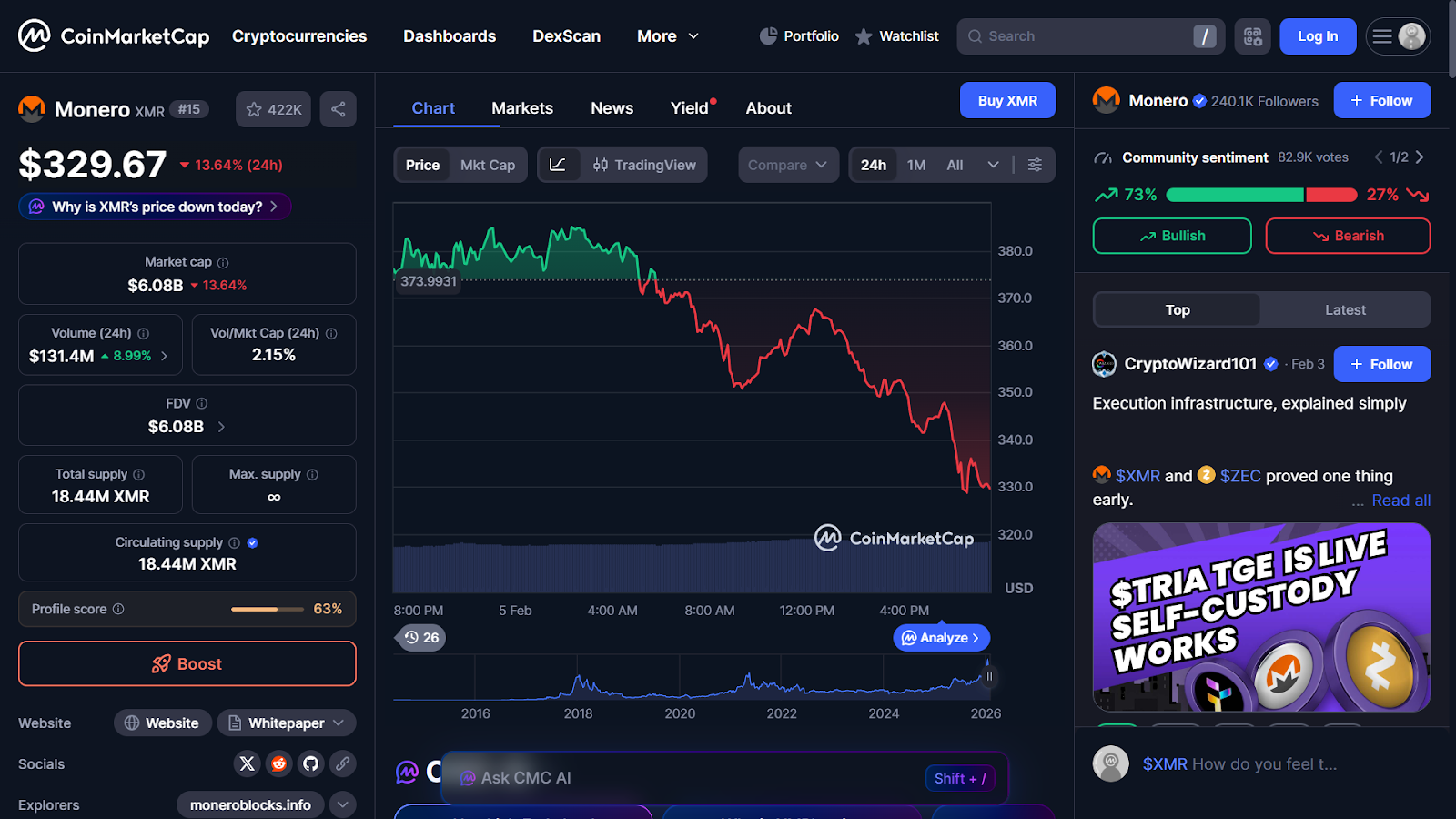
Monero focuses on default privacy, meaning every transaction is protected without requiring user action. It uses ring signatures, stealth addresses, and ring confidential transactions together, making sender, receiver, and amount information indistinguishable on the blockchain. This design makes Monero resistant to chain analysis and difficult to blacklist, which is why it is often used for peer to peer payments where privacy is non negotiable.Monero’s consistency is its strength. Because all transactions follow the same privacy rules, there is no transparency leakage caused by optional settings or mixed transaction types.
2. Zcash (ZEC)
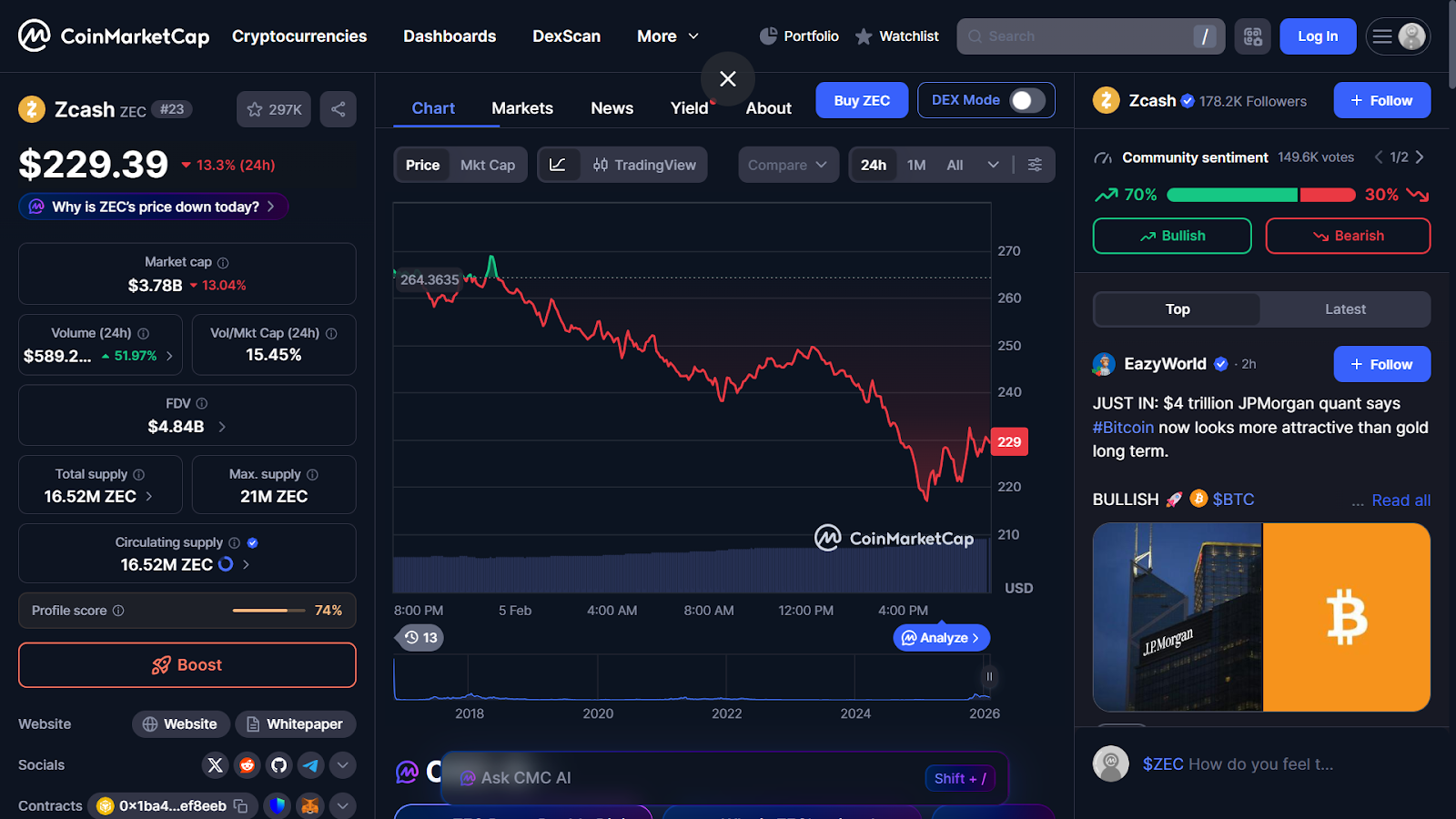
Zcash offers a selective privacy model that allows users to choose between transparent and shielded transactions. Its core technology relies on zero knowledge proofs, enabling the network to confirm transactions without revealing sensitive details. This flexibility appeals to users who want privacy when needed while still interacting with transparent systems. However, optional privacy also creates usage patterns that can be analyzed. When shielded transactions are underused, anonymity sets shrink, which can weaken overall privacy guarantees compared to always private networks.
3. Dash (DASH)
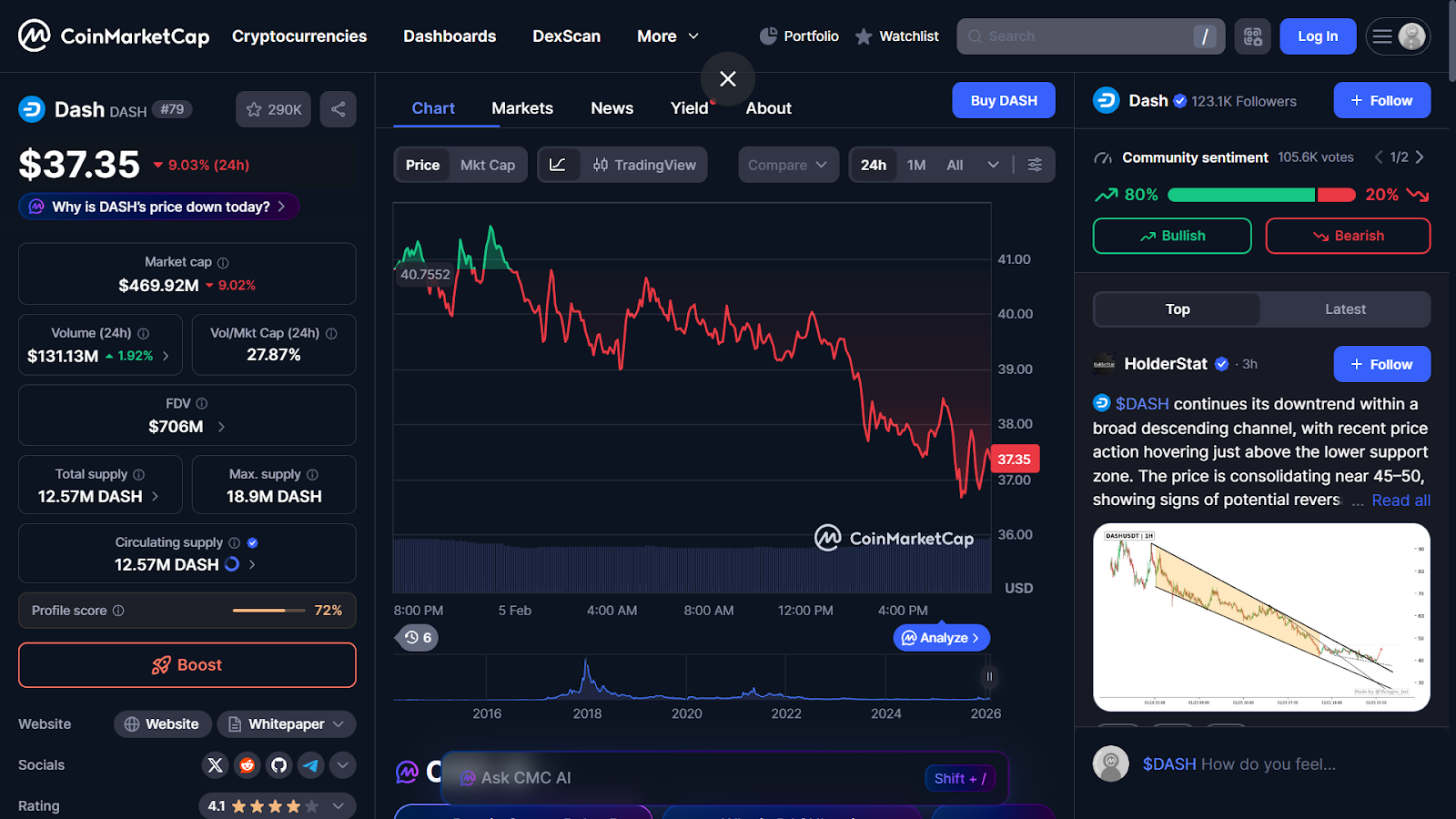
Dash approaches privacy through an optional mixing feature rather than full protocol-level obfuscation. Its PrivateSend function combines multiple transactions to make tracing more difficult, while the blockchain itself remains largely transparent. As a result, Dash offers greater accessibility but less privacy than cryptocurrencies designed exclusively for anonymity.
Market participants typically classify Dash as a payment-focused cryptocurrency with added privacy tools rather than a true privacy-first asset, which influences how exchanges and regulators handle it.
4. Verge (XVG)
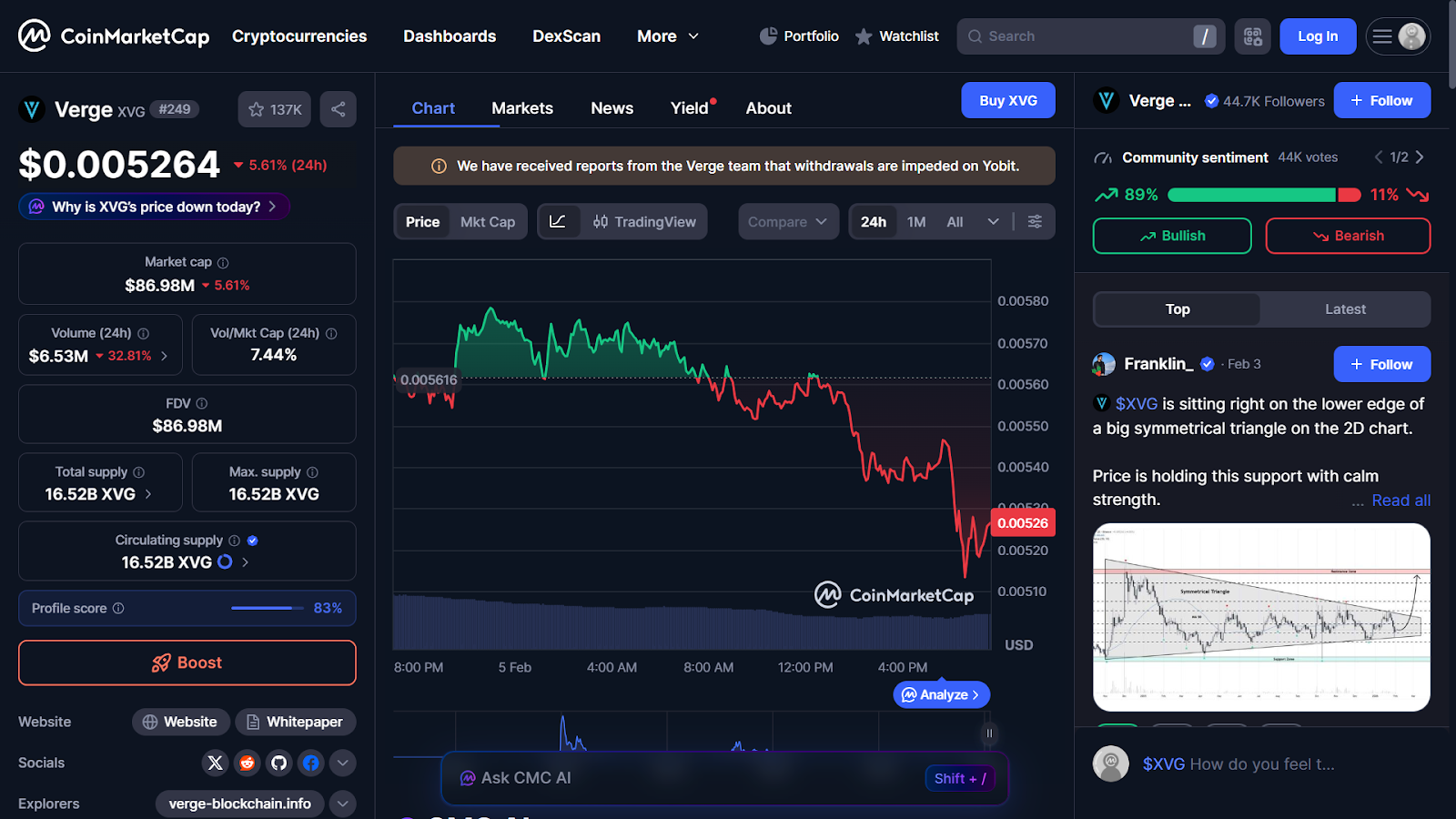
Verge emphasizes network level privacy by routing transactions through anonymity networks such as Tor and I2P. This hides user IP addresses and location data, reducing the risk of network surveillance. The blockchain itself remains transparent, but metadata exposure is significantly limited. This approach benefits users concerned about real world identity leaks rather than on chain transaction tracing, making Verge a distinct option among privacy focused cryptocurrencies.
5. Pirate Chain (ARRR)
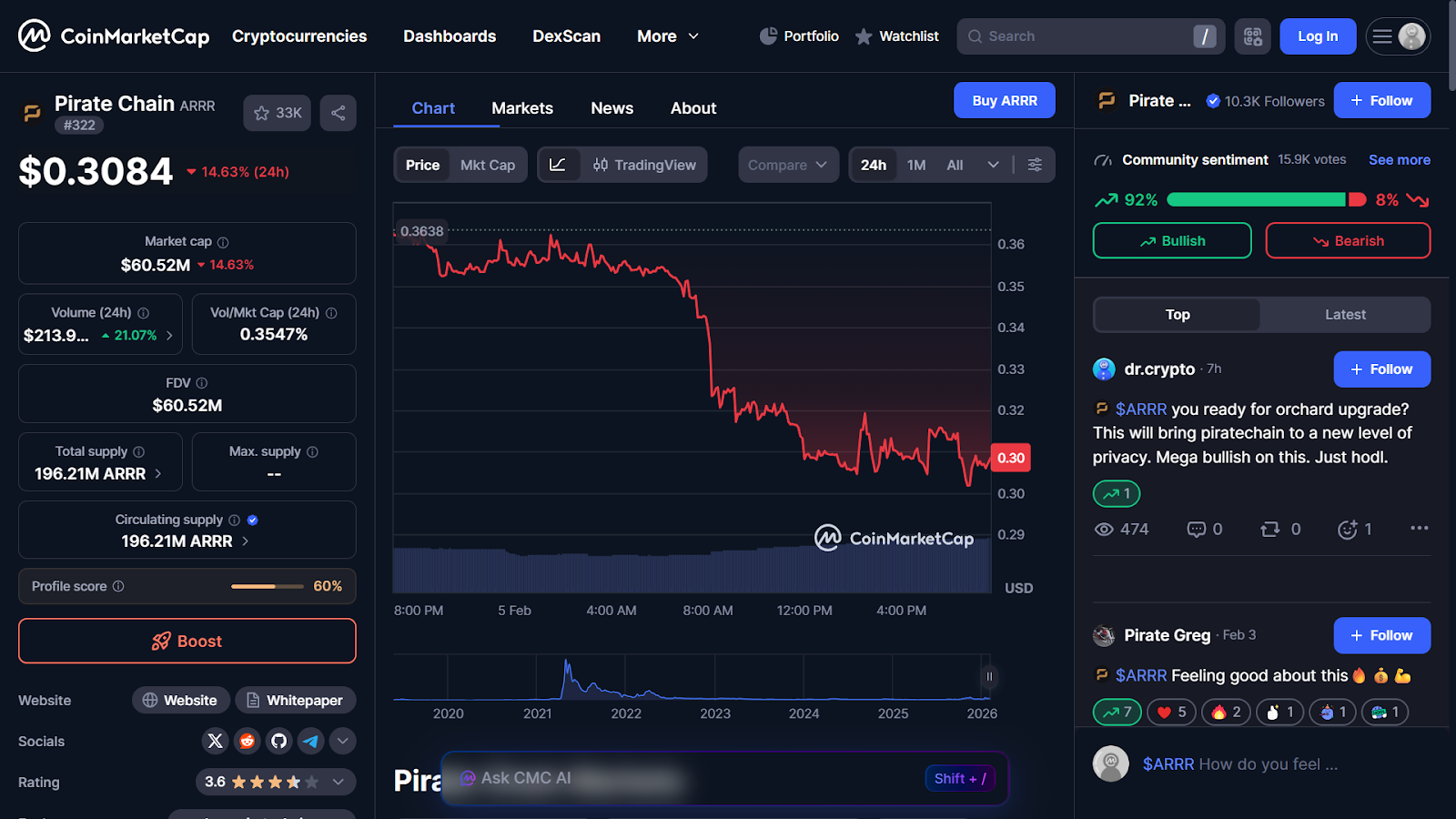
Pirate Chain enforces privacy at all times by using shielded transactions exclusively. Built on zero knowledge proof technology, it removes the option for transparent transfers entirely. Every transaction is fully private by default, increasing anonymity sets and reducing behavioral analysis risks. Because transparency is never allowed, Pirate Chain appeals to users who want maximum privacy guarantees and minimal compromise. This strict design choice places it firmly at the privacy maximalist end of the spectrum.
Benefits of Using Privacy Coins
Enhanced Anonymity: Privacy coins ensure that your identity and transaction details remain confidential, protecting you from unwanted scrutiny.Secure Private Transactions: These coins use advanced cryptographic techniques to safeguard sensitive financial activities, ensuring peace of mind.Freedom from Oversight: Privacy coins allow users to conduct transactions without interference from third parties or regulatory bodies.Financial Independence: They empower users to maintain control over their finances without relying on centralized systems.
Risks and Challenges of Privacy Coins
Regulatory Scrutiny: Governments and financial institutions often view privacy coins with suspicion, leading to potential restrictions or bans.Association with Illicit Activities: The anonymity offered by privacy coins can attract misuse, tarnishing their reputation.Limited Adoption: Privacy coins are not as widely accepted as mainstream cryptocurrencies, which can limit their usability.Volatility: Like other cryptocurrencies, privacy coins are subject to significant price fluctuations, posing risks for investors.
Regulatory and Legal Considerations for Privacy Coins
Privacy coins have sparked significant debate among regulators and law enforcement agencies due to their ability to obscure transaction details. While these coins provide users with enhanced anonymity, they also raise concerns about potential misuse for illegal activities such as money laundering and tax evasion.
Law enforcement agencies often struggle to trace transactions involving privacy coins, which complicates efforts to combat financial crimes. This has led to increased scrutiny and, in some cases, outright bans or restrictions on the use of privacy-focused cryptocurrencies in certain jurisdictions. On the other hand, advocates argue that privacy coins are critical for protecting individual freedoms and storing privacy coins in a crypto wallet.
How Do Privacy Coins Differ From Regular Cryptocurrencies?
Privacy coins stand apart from regular cryptocurrencies by prioritizing anonymity and confidentiality in transactions. While traditional cryptocurrencies like Bitcoin and stablecoins focus on transparency and stability, privacy coins are designed to shield user identities and transaction details. Let’s explore these differences in detail.
Privacy Coins vs Bitcoin
FeaturePrivacy CoinsBitcoinAnonymityTransactions are untraceable and private.Transactions are publicly visible on the blockchain.Transaction DetailsHidden from public view.Fully transparent and accessible to anyone.Use CaseIdeal for private transactions.Suitable for general-purpose transactions.
Privacy Coins vs Stablecoins
While privacy coins emphasize anonymity, stablecoins are designed to maintain a stable value by being pegged to assets such as fiat currencies. In contrast, stablecoins are typically used to minimize volatility in everyday financial transactions, whereas privacy coins appeal to users who prioritize confidentiality.
Privacy Coins vs Security Tokens
Security tokens represent ownership in an asset or company and are subject to strict regulations. Privacy coins, on the other hand, are decentralized and enhance user anonymity. Security tokens are often used for investment purposes, while privacy coins are tailored for secure, private transactions. These distinctions highlight the unique role privacy coins play in the cryptocurrency ecosystem, offering solutions for users who prioritize discretion and security.
How to Buy Privacy Coins Safely
Understanding how privacy coins fit into cryptocurrency is essential before making a purchase. These coins are designed to prioritize anonymity and security, making them a unique segment of the digital currency market. To buy privacy coins safely, follow these steps:
Step 1: Choose a Reputable Exchange
Select a cryptocurrency exchange that supports privacy coins and has a strong reputation for security. Look for platforms that offer robust encryption and two-factor authentication.

Step 2: Research KYC Requirements
Some exchanges require Know Your Customer (KYC) verification, while others allow you to buy privacy coins without KYC. If anonymity is a priority, opt for platforms that align with your privacy preferences.
Step 3: Use a Secure Wallet
Store your privacy coins in a secure, non-custodial wallet. Hardware wallets are an excellent choice for long-term storage, as they provide an added layer of protection against hacks.
Step 4: Verify Transaction Details
Double-check all transaction details before confirming a purchase. Privacy coins often use advanced technologies like stealth addresses, so ensure you’re familiar with the process.
Should You Invest in Privacy Coins in 2026?
As the demand for financial privacy grows, privacy coins are becoming an increasingly attractive investment option in 2026. These cryptocurrencies offer unique advantages, such as enhanced anonymity and secure financial transactions, making them a valuable addition to a diversified portfolio. However, before investing, it’s essential to consider factors like market volatility, regulatory scrutiny, and the long-term viability of these coins.
For those interested, using the best wallets for privacy-focused cryptocurrencies, such as hardware wallets or privacy-centric software wallets, ensures secure storage and protection of your assets. While privacy coins present significant opportunities, they also come with risks. Regulatory challenges and limited adoption in mainstream markets can impact their growth potential. Investors should conduct thorough research, stay informed about legal developments, and evaluate their risk tolerance.
Conclusion – Is a Privacy Coin Worth the Investment?
Privacy coins can be a valuable investment for those who prioritize financial anonymity and security. While they offer unique benefits, such as untraceable transactions and enhanced privacy, potential investors must weigh the risks, including regulatory scrutiny and market volatility. With proper research, secure storage using the best wallets for privacy-focused cryptocurrencies, and a clear understanding of your financial goals, privacy coins can be a strategic addition to your portfolio.
FAQs
What are the best privacy coins to invest in 2026?
The best privacy coins to invest in 2026 include Monero (XMR), Zcash (ZEC), Dash (DASH), Verge (XVG), and Pirate Chain (ARRR), as they offer advanced privacy features and strong community support.
Can privacy coins be traced?
Privacy coins aim to be untraceable by using technologies like stealth addresses, Ring Signatures, and Zero-Knowledge Proofs, making it extremely difficult to trace transaction history.
How do privacy coins work differently from Bitcoin?
Privacy coins work differently from Bitcoin by concealing transaction details such as sender, recipient, and amounts, whereas Bitcoin transactions are fully transparent and recorded on a public ledger.
Are privacy coins legal?
Privacy coins are legal in many countries, but their use is subject to regulatory scrutiny and restrictions in some regions due to concerns about anonymity and potential misuse.
Why are privacy coins important for financial privacy?
Privacy coins are important for financial privacy because they protect user identities and transaction details.