In a digital landscape increasingly dominated by monolithic tech giants, a quiet revolution may be underway. Bless Network, a self-proclaimed “shared computer,” has officially launched its mainnet, as announced on Sept. 23, 2025. The new protocol allows anyone to contribute their spare computing power and earn cryptocurrency in return.
Bless aims to challenge the traditional cloud computing model and, in the process, democratize access to a multi-trillion-dollar industry.
For years, the vast profits from the global cloud computing market, which is now “approaching $1 trillion,” have flowed almost exclusively to a handful of companies like Amazon Web Services (AWS) and Google Cloud. This has created a centralized infrastructure where computing power is concentrated in sprawling, resource-hungry data centers.
Bless, however, is proposing a radically different vision, an infrastructure owned and operated by the people. According to the announcement, the launch follows less than a year of testnet activity that saw the network grow to more than 6.3 million nodes and 2.5 million users, making it one of the largest decentralized compute testnets to date.

Empowering the everyday user
Bless Network claims that its appeal lies in its unparalleled accessibility. While other decentralized compute platforms often require technical expertise, coding skills, or complex server management, Bless claims to have removed these barriers.
The platform operates through a simple browser extension, transforming the user experience from a technical hurdle into a seamless, click-and-earn process.
This straightforward approach is a “first truly viable bridge for Web2 users entering decentralized infrastructure,” according to the team. It addresses a critical gap that has limited the broader adoption of decentralized computing.
By democratizing infrastructure ownership, Bless claims to make it possible for students, small businesses, and non-expert users to become active participants in the digital economy’s growth.
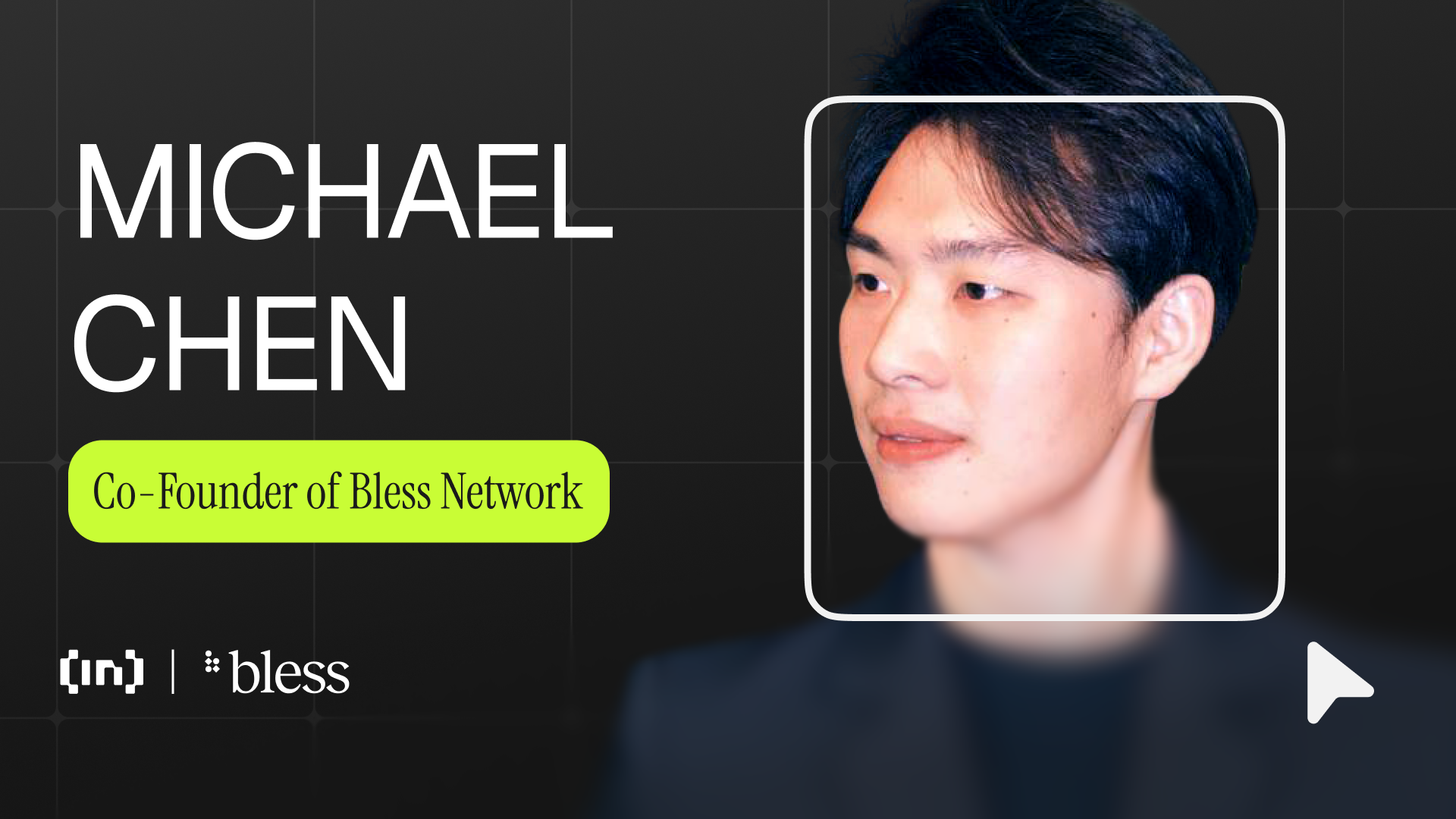
As Bless Network Michael Chen, Co-Founder of Bless puts it, “We’re building a world where anyone, anywhere can help power AI and the apps and tools they use every day, and be rewarded for it.”
The benefits for users are twofold, according to the protocol’s team. First, users can earn cryptocurrency rewards simply by contributing their unused CPU and GPU power. Second, they are no longer just passive consumers of technology; they become part of a community-owned infrastructure.
This model directly benefits contributors and builders alike, as the network’s growth and utilization translate into tangible value for its members.
The economic engine: TIME and BLESS tokens
The economic model behind Bless is designed to reward participation while ensuring long-term value. The system uses two tokens: TIME and BLESS.
Users earn TIME tokens in proportion to their contributions, similar to a loyalty program. This is the transactional token that users accumulate for their work. It’s not just about providing compute power, the team claims, TIME also represents “the creation of educational material, organization of community initiative, and other activities which help grow the network.”
The real value, however, is tied to the BLESS token, the network’s governance token, which has a fixed total supply of 10 billion. Every few months, in periods called “Chapters,” users can redeem their TIME tokens for BLESS.
The supply of TIME is seasonal, with a fixed supply of 100 million TIME minted in each Chapter. At the end of each Chapter, any unredeemed TIME is either burned or redeemed, creating a deflationary mechanism that supports the value of BLESS over the long term. This approach was designed to ensure that rewards went to community members who helped build the network’s foundation, rather than to speculators.
According to the Bless Network team, “45% of BLESS is reserved for rewarding the community,” underscoring their commitment to a community-centric model.
This system effectively turns a user’s idle computer into a source of income, enabling them to “capture value from this boom rather than watching as profits flow exclusively to big tech companies,” the announcement states. It’s a powerful and simple value proposition that could resonate with anyone looking to earn from the tech boom without needing to be a coding wizard or a data scientist.
Decentralized advantage: Challenging the status quo
Beyond the economic benefits for users, Bless Network’s distributed architecture claims to offer other significant advantages over centralized cloud services. While companies like AWS and Google Cloud rely on massive, centralized data centers, Bless operates on a network of millions of individual devices. This distributed model can offer several key benefits, according to the protocol’s team:
Cost Efficiency. Bless’s distributed architecture can offer up to “90% cost reductions” compared to traditional cloud services. This makes high-performance computing accessible to a much wider audience, from independent developers to small businesses.
Lower Latency. By distributing nodes geographically across millions of devices, the network can provide lower latency for applications, especially for those that require responsiveness close to the end-user.
Resilience and Scale. The sheer scale of the network, with over five million nodes in its testnet phase, provides more extensive coverage and resilience than many centralized alternatives. If one node goes offline, countless others are there to pick up the slack.
According to the Bless team, the crucial difference lies in the management of trust and reliability. Centralized providers like AWS “own data centers across the globe, and orchestrate them with a Kubernetes framework. Because they own these data centers, they have offloaded the trust and reliability layer to humans.”
In contrast, decentralized platforms must rely on technology alone.
Securing the shared computer: Trust without central authority
The skeptical user may wonder if a system where contributors and developers are strangers can truly be secure. In an attempt to address this concern, Bless claims that it can prevent misuse and protect user data through a multi-layered technological approach.
“Unauthorized use in the sense of a developer attacking the node runner is prevented with our WASM secure sandbox,” the team asserts. According to the protocol’s documents, this WebAssembly (WASM) secure runtime pre-compiles all deployments into a binary format and processes them in a sandboxed environment.
This means the node runner has no idea what workload is being processed, and the software cannot access the wider host machine environment for private information.
Furthermore, Bless claims to ensure the integrity of the work itself. “Bless also implements redundancy, consensus, and verification mechanisms so that workloads can be processed by multiple computers at once, and their correctness can be checked via mechanisms such as pBFT, RAFT, or ZK proofs.”
This technological approach to verification replaces the human trust layer of a central data center, guaranteeing that the work is performed accurately and reliably.
For reliability, Bless has “both a subsecond fail-over system, where if one cohort of nodes fails execution, the workload will be automatically passed to another cohort, and also a reputation system where nodes that failed to perform would over time be deprioritized in workload allocation and eventually kicked out of the network.”
This combination of technical safeguards and a reputation-based incentive model is intended to create a robust and self-sustaining ecosystem.
The future of infrastructure
The Bless team claims that they launched their network in a direct response to growing concerns about the concentration of power in the hands of a few large corporations. By creating a workable, community-owned alternative, Bless argues that it is reshaping how computing resources are allocated globally.
This democratized approach positions Bless as a powerful solution for users who want to participate in the digital economy’s growth, regardless of their level of technical knowledge. The platform’s burgeoning user base of over five million nodes could provide a foundation for an internet infrastructure capable of powering everything from AI applications to streaming services and beyond.
If it succeeds, the economic benefits of this infrastructure will flow directly back to the very people who power it, creating a new, more equitable model for the digital age. In the Bless vision, every computer, no matter how small, has the potential to contribute to a larger, shared whole, and every user can directly benefit from the growth they help create.